
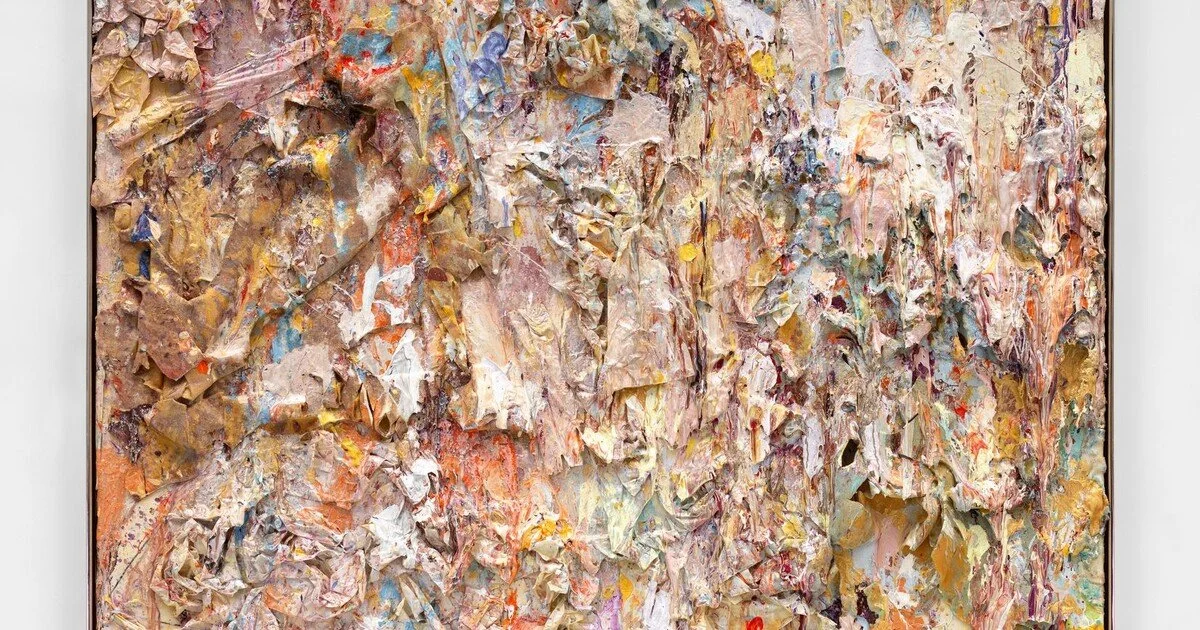
New Waves, New Media: Material transformations in painting during the 1980s
Frank Bowling Foundation, guest lecturer
July 2025, London
Presented during a residency during the summer of 2025 at the Frank Bowling Foundation and Archive, this paper introduced the broader Bowling team to my research, outlined the stakes of investigating painting at the end of the century — especially the material, cultural, and ideological transformations it underwent in the 1980s, when some viewed painting as a dying form — and offered some of my preliminary findings after one month of work. Below is an excerpt of the presentation’s opening remarks:
“Of course, in asking why Bowling began incorporating collage and other postmodernist idioms into his theretofore staunchly modernist practice, I don’t mean to overthink or sideline the role of artistic experimentation or creativity. Rather, my research seeks to understand them as the products of historical limitations and affordances. For the types of moves Bowling made in his “long 1980s” works bear striking parallels to not only trends in the art world during the 80s – a period marked by anxiety about the “end of painting” as Douglas Crimp called it, or by a “New Wave” of youthful reactionism to the high days of modernism – but his work evinces clear traces of the shifts in concepts around much broader terms like “art” and “culture” writ large.
That Bowling gravitated towards multi-media, that his work begins blurring the bounds between art and non-art, that he makes space for questions of personal experience and identity at this exact moment in history seems far too serendipitous to be the result of personal whim or chance experimentation.
What interests me is the conflict lodged at the core of Bowling’s present-day legacy. On the one hand, there is plenty of evidence of his formalist ethos, his devotion to the properties of paint, his modernism. On the other hand, we can’t deny that (at least in the US, but also certainly to some extent in the UK) part of Bowling’s current popularity does, in fact, hinge on his biography and race.”