“A Very Different Light”: At the limits of formalism and biography
Florida State University Graduate Student Conference
March 2026, Tallahassee, FL
While Frank Bowling’s 1970s paintings have been described as “High Modernist” for their self-reflexive interest in facture and Bowling’s admitted preference for “boundaries of formalism,” as he called them, by the end of the century he apparently traded in his preoccupations with medium for ones stemming from cultural-political and biographical origins.
This shift is best emblematized by Bowling’s recounting of his 1989 visit to his country of birth, Guyana, wherein he was gripped by a revelation. “The light in my pictures is a very different light,” he realized, “the light is about Guyana. It is a constant.” Henceforth, Bowling openly embraced associations between form and biography which he had previously denied, imbuing the latter with near-totalizing power.
This paper first explores what Bowling gained with this abrupt turn towards biographical explication – namely, articulating a more complex Caribbean identity, challenging formalist dogma, and legibility to a market and institutional atmosphere congenial to multiculturalism. Then, the paper outlines some possible losses incurred (for Bowling, but also a growing number of his contemporaries) through this turn towards the self, including the reduction of abstraction to a series of symbols to decode, the reification and ossification of identity markers, and the gradual relinquishment of avant-garde political aspirations.
Key images
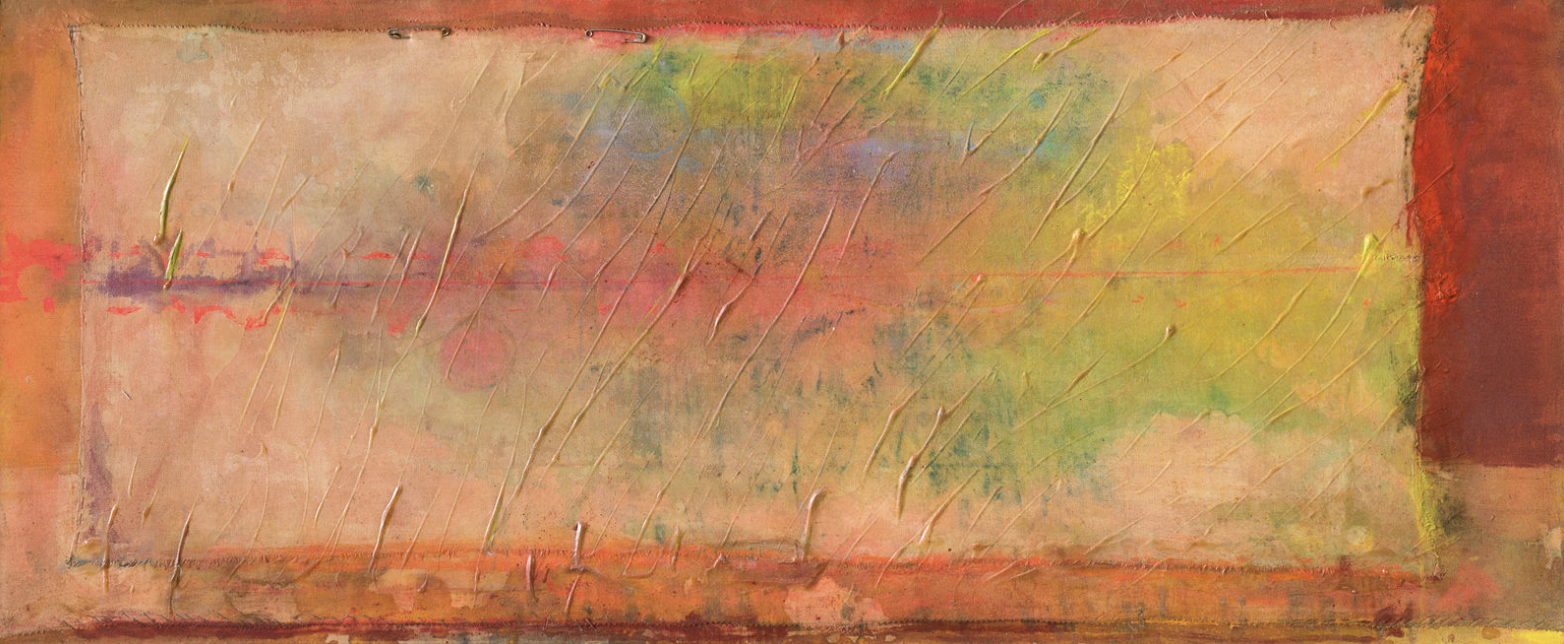
Frank Bowling, Ashton’sfish(Spencer’scatch), 1997, acrylic paint, acrylic gel, and mixed media on collaged canvas, 60 × 145cm
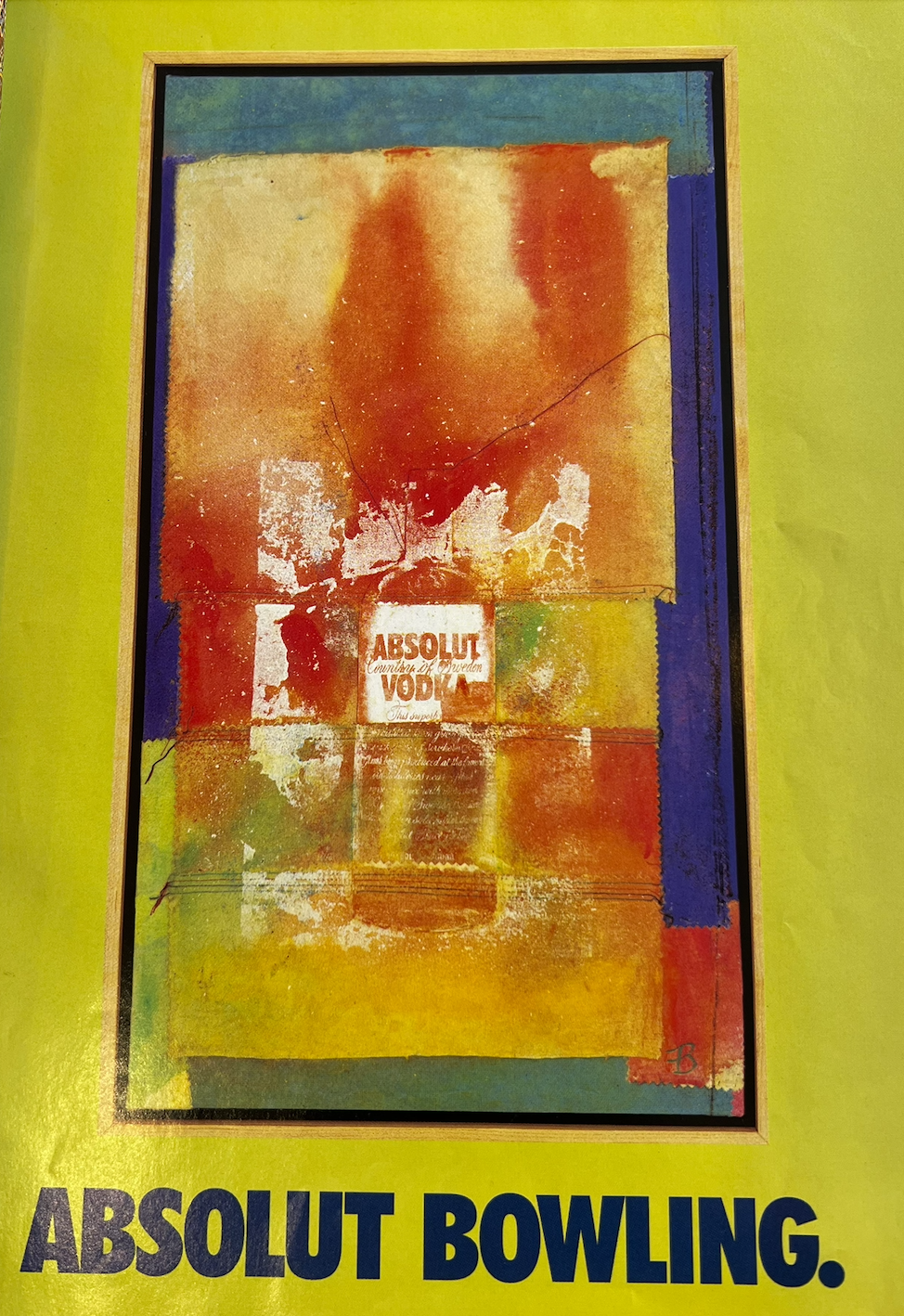
Absolut Vodka advertisement, Black Enterprise magazine, Sept. 1997