
The meaning of Frank Bowling’s Wintergreens in the Royal Academy collection
Tufts University, Ekphrasis, May 2026
The painter Frank Bowling’s election to the British Royal Academy in 2005 was historic for two reasons: the Guyanese-British painter was the storied institution’s first black academician in its nearly 225-year history; however, in an unprecedented turn, his choice of submission for diploma painting – a customary bequeathal by all incoming RA members – was rejected and he was asked to select another.
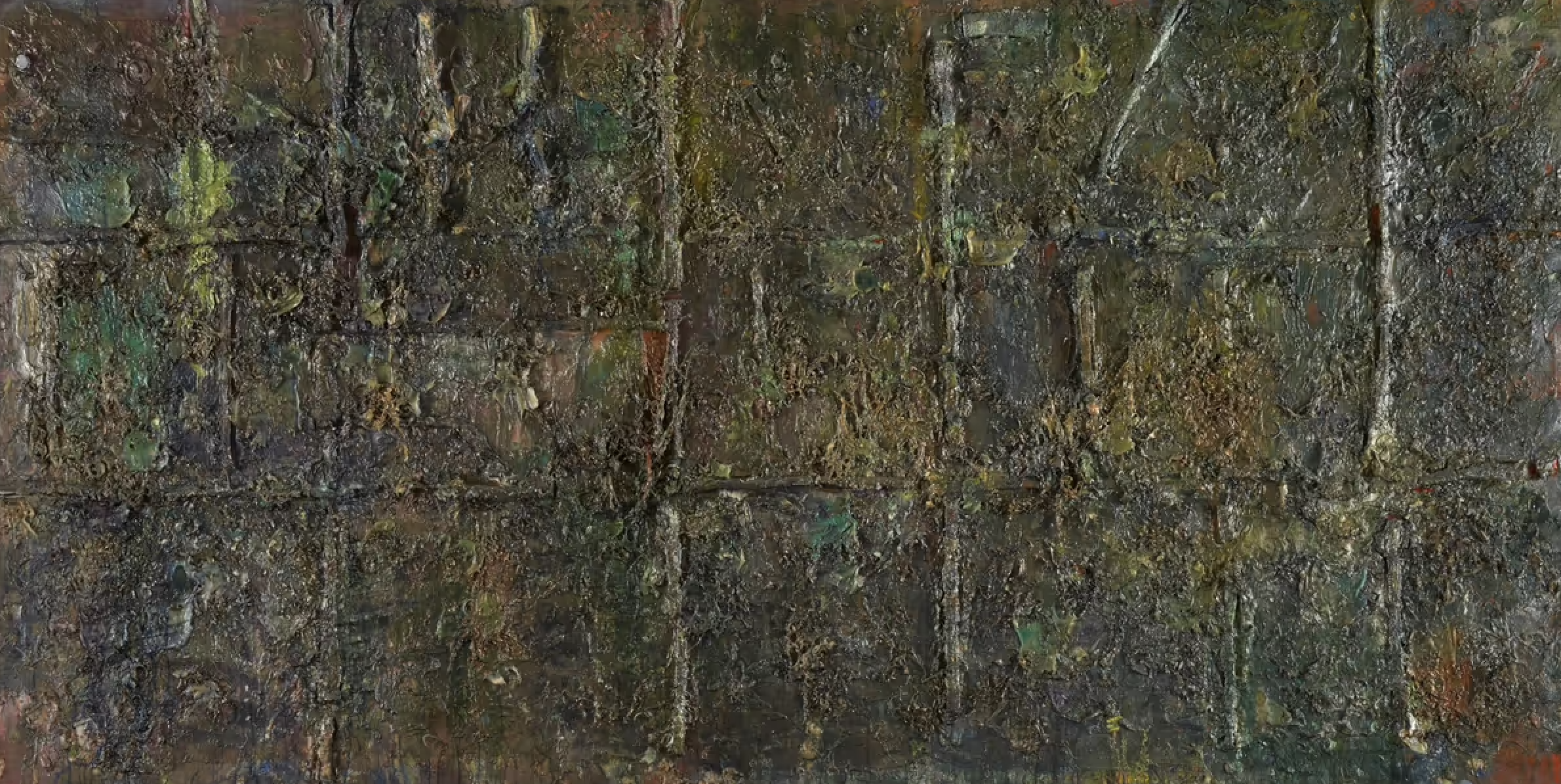
Wintergreens, 1986, acrylic and mixed media on canvas, 174 × 348 × 10cm
Bowling’s original submission, Wintergreens, 1986, was nearly two decades old at the time of his election and, so the RA suggested, the artist might wish to select a more recent and representative work to join their permanent collection. The backlash from the Bowling camp was swift, with charges of institutional racism countering the RA’s stated reasons for their unorthodox rejection. As one commentator posited, “perhaps it was thought that such a major work by the Academy’s first black British member would be too imposing?”
This paper examines the two competing narratives for Wintergreens’ apparent unsuitability for the Royal Academy and proposes a third possibility that has heretofore gone unexamined: that, at best, Wintergeens is a difficult and unusual painting, given its clear anti-formalist and proto-New Materialist commitments (especially for Bowling, a self-professed formalist); or, at worst, that it threatens to undermine the very definitions of art established at the RA’s inception and, by extension, imperiling the role of the viewing subject whom this art historically addresses.
Keywords: painting, formalism, postmodernism, New Materialism, British Royal Academy
Driven by curiosity and built on purpose, this is where bold thinking meets thoughtful execution. Let’s create something meaningful together.